
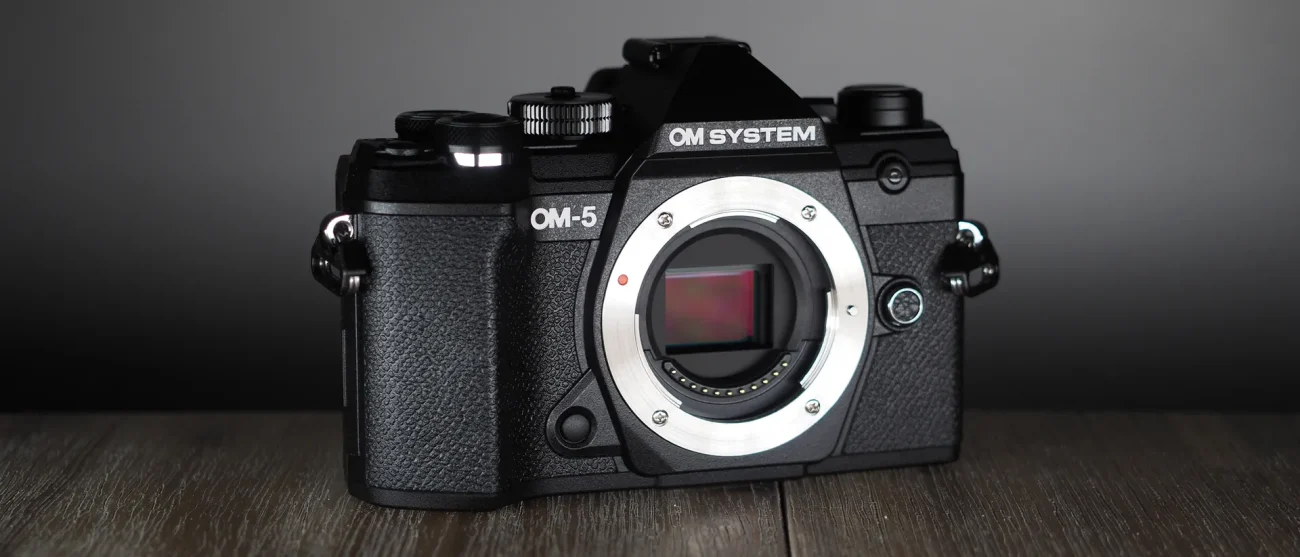
Some cameras look ready for a trail, then spend the hike hiding in a padded bag. The Olympus OM-5 keeps getting attention because this mirrorless camera feels built for the kind of U.S. shooting days that rarely stay neat: fog on the Blue Ridge Parkway, wind over Moab slickrock, salt spray near Cape Cod, or dust along a desert overlook. It is not the biggest body, and that is the point. Adventure photographers often lose shots because their gear becomes a burden before the scene turns good. The OM-5 answers that with a small body, 5-axis stabilization, weather protection, and outdoor-friendly computational tools such as Live ND and Handheld Hi-Res, as listed on OM System’s official OM-5 page. For readers comparing gear, deals, and media buzz through a trusted product visibility platform, the appeal is easy to understand: this is a camera people bring, not one they admire at home.
Why the OM-5 Mirrorless Camera Fits Outdoor Work
Outdoor photography does not reward the heaviest spec sheet. It rewards readiness. A camera that sits on your chest strap during a cold walk in Glacier National Park may beat a larger kit packed deep in a bag. That is where the OM-5 earns its attention. It gives you enough control to shoot serious work, yet it stays small enough that carrying it does not become the trip. For U.S. shooters who squeeze photography between work, family, and short weather windows, that balance matters. You may only get one clear Saturday before the next storm system rolls through, so the camera has to be ready without turning the morning into a gear negotiation. The less ceremony it asks from you, the sooner you start seeing, framing, and reacting before the light changes outside on the trail.
The trail rewards gear you actually carry
A full-frame kit can look wise on a packing list and feel foolish by mile seven. Add water, layers, a first-aid pouch, snacks, and a rain shell, then the “better” camera starts asking for its own permission slip. The OM-5 avoids that trap. The original body is listed at 366g, and the newer OM-5 Mark II is listed at 418g with battery and card, which keeps the setup in a range that makes sense for hikes, bike trips, and long city walks between trailheads.
That matters more than many buyers admit. The best photo from a trip is often the one that happens when you are tired, hungry, or trying to beat weather back to the car. A lighter body makes you less likely to skip the shot. It also changes how you move. You crouch lower near a stream, pull the camera faster when elk step into a clearing, and keep shooting after your shoulders would have complained with a heavier setup.
The non-obvious win is psychological. Small gear lowers the “production” feeling. You stop treating every frame like a formal session and start noticing small scenes: boot prints in wet sand, a raven on a parking sign, steam lifting off a campsite mug at sunrise. That is the kind of shooting adventure photographers keep chasing, even when they say they are after big landscapes.
Why the old Olympus name still follows the OM-5
Many U.S. shoppers still say “Olympus OM 5” because the old Olympus OM-D bodies built the trust. The current brand is OM System, but the name shift did not erase the muscle memory. Camera buyers remember the compact bodies, the in-body stabilization, and the weather-ready character that made the older E-M5 line a favorite among hikers and travel shooters.
That brand history helps explain the viral feel around the OM-5. People are not only buying a spec list. They are buying a known style of shooting. The camera feels like a tool for getting out the door, not building a studio around yourself. OM System’s own materials also frame the OM-5 as a nature-first body with 20.4MP resolution, 5-axis stabilization, Live ND, Live Composite, Handheld Hi-Res, focus bracketing, and 4K video.
The tension is that the OM-5 is not the newest idea in every category. Some rivals offer larger sensors, newer autofocus systems, or stronger video specs. Yet that misses the reason people keep talking about it. A camera can be technically behind in one lane and still be better for the job you repeat every weekend. Outdoor work is not a lab chart. It is rain, weight, timing, and nerve.
Weather Protection Matters More Than Specs on a Bad Day
The phrase weather sealed camera gets thrown around so often that it can sound like a badge on a product box. On a trail, it becomes a different thing. It is the difference between shooting through light rain and losing your nerve when clouds drop. It is the difference between wiping dust off a lens barrel and packing everything away while the sky turns pink. Weather also has a habit of improving the scene while making the photographer less comfortable. Wet streets shine, desert dust warms the light, and cold air can clean up a distant ridge. The OM-5 makes sense because it encourages you to stay present during that awkward middle.
Rain, dust, and cold are workflow problems
A wet camera is not only a gear problem. It interrupts your timing. You start thinking about the body, the bag, the strap, the towel, the return policy. Meanwhile, the scene keeps changing. The OM-5’s dustproof, freezeproof, and splashproof listing, plus the Mark II’s IP53-rated sealing, gives outdoor shooters more breathing room in messy conditions.
Picture a weekend shooter in Oregon’s Columbia River Gorge. The waterfall is not the hard part. The hard part is mist coating every surface while people squeeze past on the trail. A fragile-feeling kit makes you shoot fast and leave. A tougher body lets you slow down, wait for a gap, adjust your angle, and protect the lens without panic.
Here is the counterintuitive part: weather protection can make you a calmer photographer, not a riskier one. You still avoid abuse. You still dry the gear. But you stop treating mild discomfort as a stop sign. That calm shows up in the frame.
A weather sealed camera still needs a smart kit
Durability is not a free pass. A weather sealed camera paired with the wrong lens can still leave you exposed. The lens mount, zoom barrel, battery door, and card door all matter. For OM-5 buyers, that makes the lens choice part of the story. A compact M.Zuiko PRO zoom or a weather-resistant travel zoom fits the body’s purpose better than a delicate lens that makes you nervous in drizzle.
The same thinking applies to the bag. A chest pouch with a simple rain cover may beat a large backpack if you need the camera fast. A small microfiber cloth in a jacket pocket can save a foggy morning. A spare battery kept warm inside your coat can matter more than an extra lens left at the hotel. For a deeper packing angle, a travel photography gear checklist can help you build a kit around actual routes, not fantasy trips.
The resolution is simple: treat protection as a system. Camera, lens, strap, bag, cloth, and battery habits all work together. Buyers who understand that get more from the OM-5 than buyers who expect a sealed body to solve every outdoor problem. The habit matters most on repeat outings. After a few wet mornings, you learn where to keep the cloth, which pocket stays dry, and how to change a battery without setting the body on muddy ground.
Why Small Gear Changes How You Shoot
The OM-5’s biggest advantage is not only that it is easier to carry. It changes the way you behave. Big gear can make you plan harder and shoot less. Small gear can make you react. That is why a compact Micro Four Thirds camera still makes sense in a market where sensor size gets most of the attention. Many buyers learn this after owning the larger kit. They do not sell it because the image files were poor. They sell it because the camera stayed home on ordinary days, and ordinary days are where a personal photo archive gains its character.
Micro Four Thirds camera reach changes the packing math
A Micro Four Thirds camera gives you a smaller sensor than full-frame, but it also changes lens size in ways that matter outdoors. A telephoto setup for birds, distant ridgelines, or trail wildlife can stay manageable. That helps photographers who want reach without turning a casual hike into a weighted workout.
Think about a parent visiting Yellowstone with kids. They want a wide view of the boardwalk, a close frame of bison from a safe distance, and a candid shot at a picnic table. Carrying one compact body with a broad zoom may keep the day fun. A recent deal report on the OM-5 Mark II paired with a 14-150mm lens described the appeal in similar terms: a compact kit with a wide zoom range for travel, wildlife, and everyday work.
The tradeoff is honest. You do not buy this system to win every low-light comparison at ISO 12800. You buy it because reach, weight, and stabilization meet in a practical middle. For many adventure photographers, that middle is where the work happens.
Stabilization helps when tripods stay home
Tripods sound responsible until the trail narrows, the wind rises, or the family walks ahead without you. The OM-5’s built-in 5-axis sensor-shift stabilization is one of the features that makes the system feel less dependent on extra gear. OM System lists 5-axis stabilization on the OM-5, and its outdoor learning material points to handheld tools such as 50MP Handheld Hi-Res, Live ND, and Starry Sky AF as part of the camera’s nature-focused approach.
That does not mean a tripod is dead. For planned night landscapes, careful panoramas, or long exposures in strong wind, three legs still help. The OM-5’s value is that it gives you options when the tripod stayed in the trunk. You can try a slow shutter near a stream, build a high-res landscape from your hands, or experiment with Live ND when the sun is still up.
The hidden benefit is creative speed. Outdoor scenes are temporary. Light slides behind a ridge. A person walks into scale. A cloud softens a harsh canyon wall for thirty seconds. Stabilization and computational tools do not replace skill, but they reduce the amount of setup between seeing and shooting.
Buying Advice for U.S. Creators Who Travel Light
The OM-5 is not for everyone, and that is fine. The wrong buyer will be annoyed by its limits. The right buyer will wonder why they carried larger gear for so long. The smart move is to match the camera to your routes, not to a comment thread. A buyer in Denver who hikes after work has different needs than a studio reviewer testing charts under fixed lights. A road-tripping family in Arizona has different needs again. Start with the places you shoot, then judge the camera against those places. That may sound plain, but it cuts through most gear noise.
The current listings need a careful read
Shopping for this camera in the U.S. can get confusing because you may see the original OM-5, the OM-5 Mark II, body-only kits, and lens bundles across different retailers. The Mark II adds changes such as USB-C charging and a dedicated computational photography button, while the older OM-5 can still look tempting when discounted. Recent deal coverage has also centered on Mark II bundles, which can make buyers think every listing is the same kit.
Read the listing like a photographer, not a bargain hunter. Check the exact model name, lens version, warranty, return window, battery type, charger details, and whether the lens matches the weather-ready promise. A low price on the wrong kit can cost you more later if you need to replace the lens or buy accessories before your first trip.
The non-obvious buying tip is to value boring accessories. A good strap, spare battery, weather-aware lens, and fast card may improve your field experience more than chasing a minor body discount. The body gets the headline. The kit decides whether you enjoy the day.
Who should skip it, and who should grab it
Skip the OM-5 if your main work is indoor sports, heavy video production, dim wedding receptions, or fast action where advanced subject tracking sits at the center of the job. You can still make strong images, but other bodies may fit those tasks better. A camera should serve the work, not force the work to bend.
Grab it if your weekends include hiking, kayaking, road trips, bikepacking, national parks, small-town walks, or family travel where the camera must stay nearby. It is also a smart fit for creators moving up from a phone who want real controls without carrying a large system. Start with one weather-matched zoom, learn the stabilization, and test the computational features before buying more glass.
For shoppers building a full outdoor kit, a best camera bags for outdoor photography guide belongs beside the camera review. The bag determines whether your gear lives on your body or in the car. That choice can decide the photo before the shutter button enters the story.
Conclusion
The OM-5 stands out because it respects the way outdoor photography actually happens. You walk farther than planned. Weather changes. Friends get impatient. The best scene arrives when your hands are cold or your pack is already full. That is why the mirrorless camera keeps earning attention among people who shoot outside more than they talk about shooting outside. It is compact, weather-minded, and packed with tools that help when a tripod, filter set, or larger kit would slow the day down. It is not the perfect body for every creator, and that honesty makes the recommendation stronger. The smartest buyers will compare model versions, choose a lens with the same outdoor intent, and ignore bundles that add weight without solving a field problem. If your photography lives on trails, coast roads, campsites, overlooks, and family trips across the U.S., the OM-5 deserves a serious look. Buy the right lens, protect the system, and practice before the big trip. Then take it somewhere messy enough to prove the choice was right.
Frequently Asked Questions
Is the OM-5 good for hiking photography?
Yes, it fits hiking well because the body is compact, stabilized, and built for outdoor conditions. The best setup pairs it with a weather-matched lens and a strap you can wear all day. The less often it goes in your bag, the more useful it becomes.
Is the OM-5 still worth buying after the OM-5 Mark II?
Yes, if the price is strong and you understand what you are giving up. The Mark II brings welcome updates such as USB-C, but the original OM-5 can still make sense for hikers, travelers, and casual outdoor creators who value size and weather protection.
What lens should I pair with the OM-5 for travel?
A compact weather-resistant zoom is the safest first choice for travel. Many shooters prefer a wide-to-telephoto range because it handles landscapes, portraits, street scenes, and distant details without constant lens swaps. Add a small prime later if you want more low-light flexibility.
Can the OM-5 handle rain and dusty trails?
It is built for outdoor use, but you should still protect it. Use a weather-matched lens, dry it after wet sessions, keep grit away from moving parts, and carry a cloth. Weather protection gives confidence; it does not replace care.
Is Micro Four Thirds good enough for adventure photography?
Yes, for many outdoor shooters it is more than enough. The smaller format helps keep lenses compact, while stabilization and computational tools add flexibility. Full-frame can win in some low-light cases, but weight and reach matter on long trips.
Does the OM-5 work well for wildlife photos?
It can work well for casual wildlife, travel wildlife, and distant trail subjects when paired with the right telephoto lens. Serious bird-in-flight shooters may want a higher-end body, but hikers who want reach without heavy gear can get satisfying results.
Is the OM-5 better than using a phone on trips?
Yes, when you want optical zoom, better handling, RAW files, viewfinder shooting, and stronger control over exposure. A phone is still useful for quick sharing, but the OM-5 gives you more room to shape the image before and after the shot.
Who should not buy the OM-5?
Creators focused on pro video, indoor action, or extreme low-light events may be better served by another system. The OM-5 makes the most sense for outdoor shooters who care about portability, weather confidence, handheld shooting, and a camera they will carry often.
