

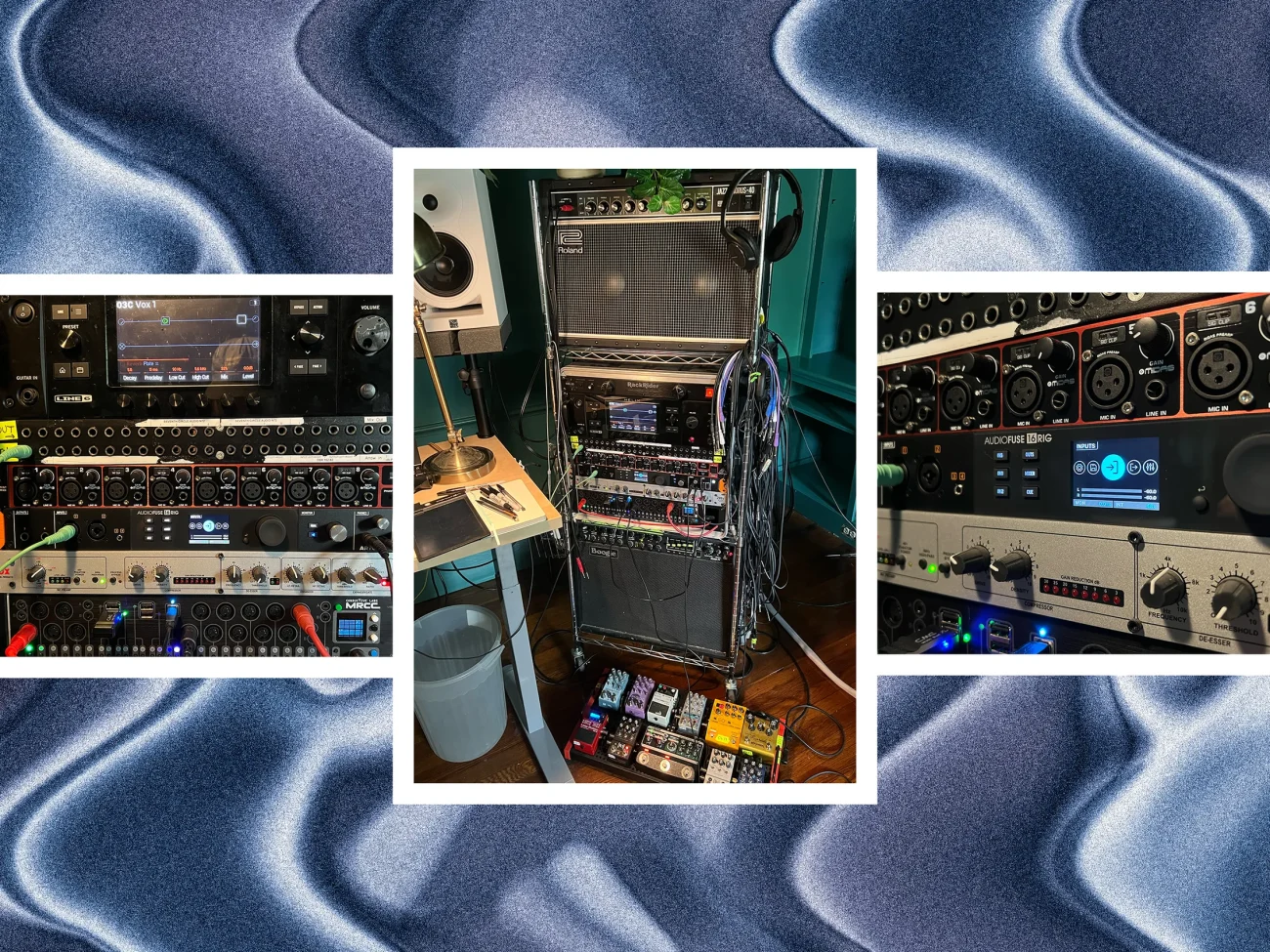
A studio deal only matters when it removes a real bottleneck. The AudioFuse 16Rig lands in that exact place for U.S. producers, synth owners, podcasters with gear-heavy rooms, and bands tired of crawling behind desks to swap cables. This is not a tiny two-input box dressed up with marketing gloss. It is a serious USB-C audio interface for people whose sessions have outgrown the “one mic and one guitar” stage. The bundle angle matters because the extra cost of expansion, cables, stands, software, and monitoring gear can turn a tempting purchase into a slow bleed. When a bundle price drops, the math changes fast. A buyer comparing setups through music tech buying coverage is not chasing a shiny box; they are trying to decide whether one larger hub can replace several smaller fixes. For many American home studios, the answer may be yes, but only if the routing needs are real. The best starting question is plain: does your current setup slow you down before you even press record?
Why the AudioFuse 16Rig Deal Feels Different for Hardware Studios
The usual audio interface sale is easy to understand: a lower price, a few free plug-ins, and maybe a cable tossed in. This one feels different because the unit sits in a higher-pressure part of the studio chain. A rackmount audio interface with this much I/O is not an impulse buy for most people. It is closer to a room decision. Once it becomes the center of your setup, every synth, drum machine, pedal loop, monitor feed, and headphone send has to make sense around it.
A lower bundle price matters only if your room is already crowded
The strongest case starts in a familiar U.S. spare bedroom. You have a laptop, two monitors, a vocal mic, a guitar pedalboard, a MIDI keyboard, maybe a Prophet, a Digitakt, a Hydrasynth, or an MPC on the desk. At first, a compact interface feels fine. Then the desk turns into a patching ritual. You record one idea, unplug two cables, lose a level setting, and forget the sound you had five minutes earlier.
That is where a larger routing brain earns its keep. Arturia lists 16 analog inputs, 12 analog outputs, dual ADAT I/O, MIDI, word clock, and high-resolution conversion on its official product details. Those specs sound dry until you picture the room. Sixteen analog inputs mean a producer can leave several stereo sources connected instead of treating every session like setup day.
The counterintuitive part is that a larger interface can make a modest room feel calmer. More inputs do not always mean more clutter. Sometimes they mean fewer half-solved workarounds. A single rack unit can replace the cheap mixer, the extra MIDI box, the dangling USB hub, and the notebook full of “remember this routing” notes.
The buyer is not only paying for sound
People argue about converters because numbers feel safe. Lower noise, cleaner capture, wider dynamic range. Fine. That matters. Yet the deeper value for a hardware-heavy studio is the five minutes before recording, when the idea is alive and the room either helps or gets in the way.
A USB-C audio interface in this tier has to behave like a traffic director, not a pretty input counter. If your synths stay wired, your outboard effects can return on dedicated channels, and your monitors behave the same way every morning, you record more often. That is not a romantic claim. It is what happens when friction drops.
There is also a business angle for creators in Nashville, Austin, Los Angeles, Atlanta, and small-town basement rooms alike. A producer doing paid overdubs or remote sessions cannot spend half an hour rebuilding a chain while a client waits on Zoom. The sale price is nice. The saved attention is better.
A software bundle adds another layer, but it should not distract from the hardware reason to buy. Plug-ins can sweeten the deal; they should not carry it. If the box does not solve your connection mess, bundled effects will feel like coupons taped to the wrong purchase.
What the Price Drop Changes for American Project Studios
A price drop on a higher-end rack unit does not make it cheap. It makes it easier to justify against the ugly stack of smaller purchases many creators buy over two years. That distinction matters. A $100 cable problem here, a budget line mixer there, one more MIDI workaround, one more preamp because the current interface ran out of holes. None of those buys feels painful alone. Together, they can cost more than a planned studio center.
This is where the American project-studio buyer has to be honest about scale. Apartment producers, church band engineers, and weekend mix rooms often live in the middle: not fully commercial, not casual either. They need gear that can grow without turning the room into a rental-studio fantasy. A lower bundle price can make that middle lane less awkward, because it lets the buyer spend once on the part of the system that everything else touches.
Bundle math can beat piecemeal upgrades
A common mistake is comparing the interface price against the cheapest thing that works today. That is how people trap themselves. A singer-songwriter may need two inputs now, but a producer with hardware synths grows sideways. First comes stereo synth capture. Then an external compressor. Then a pedal send. Then a second headphone path. The original “cheap enough” box becomes the one piece that keeps saying no.
A bundle can soften that jump if it includes expansion gear, software, or accessories you would have bought anyway. Retailers often show different package shapes: one for input expansion, one for output expansion, one for broader ADAT setups. The exact value depends on what your room lacks. An output expander helps if you send audio to pedals, alternate monitors, cue mixes, or modular gear. An input expander helps when the rack is packed with sound sources.
The non-obvious move is to price the next 18 months, not the weekend. For home studio recording, the cheaper path is not always the lower checkout total. The cheaper path is the one that avoids another rebuild when your next piece of gear arrives.
Put the planned purchases on one page before buying. Interface. Expansion. Optical cables. Short TRS snakes. Rack shelf. Power. Maybe a DI or a better headphone amp. This boring list protects you from deal fever because it shows whether the bundle removes future spending or only dresses it up.
The deal speaks to creators who hate setup drag
Some musicians love patchbays. They like the ritual. They label every cable and enjoy the tiny engineering puzzle. Plenty do not. They want the room ready before the chorus idea disappears.
That group is exactly why a rackmount audio interface can become more than a spec sheet. It puts order in the one place where home studios often feel amateur: repeatability. When a vocal chain, synth chain, and effects return can come back the same way tomorrow, your work starts to feel less like testing and more like making records.
A real example: a producer in Chicago making sample-based hip-hop may keep an SP-404, two turntables, a stereo keyboard, a vocal mic chain, and a guitar input connected. On a smaller box, that setup becomes a swap meet. On a larger hub, the producer can sample, resample, track vocals, and print pedal effects without rebuilding the desk. That workflow gain is hard to measure. You feel it by finishing more songs.
There is another quiet benefit: confidence. When the room is repeatable, you stop second-guessing whether the hum came from the new synth, the cable you moved, or the input you borrowed from another chain. Troubleshooting becomes shorter because the system has fewer mystery moves.
Connectivity, Routing, and the Hidden Cost of Outgrowing Small Interfaces
The spec that gets the attention is channel count. The feature that changes daily use is routing. Those are not the same. A busy room needs enough physical connections, but it also needs a way to move signals without turning every session into a wiring diagram. That is why the software mixer and matrix idea around this class of gear matters as much as the back panel.
The hidden cost of outgrowing a small interface is not only money. It is hesitation. You stop trying odd routings because the setup feels annoying. You stop printing a pedal effect because it means unplugging the keyboard. A stronger routing system does not make the music for you, but it removes the tiny objections that keep ideas on the shelf.
More I/O is about leaving ideas plugged in
A small interface teaches you to think in lanes. Input one is vocals. Input two is guitar. Everything else waits. That works for clean demos, podcast interviews, and simple overdubs. It starts to punish people building layered music with several sound sources.
A larger USB-C audio interface changes the rhythm. Drum machine on one stereo pair. Main synth on another. Sampler ready. Pedal return ready. Mic chain ready. Suddenly the room invites quick choices instead of asking for a cable tax before every decision.
The surprise is that more I/O can reduce gear obsession. When every device has a home, you stop buying gadgets to solve routing pain. The studio gets less dramatic. It also gets less fragile. You can open yesterday’s session and recreate the same hardware path without detective work.
This matters during writing, not only mixing. A bass patch may need to hit a delay pedal before the chorus lands. A vocal chop may need to pass through a sampler and back into the DAW. When those paths are waiting, the room feels like an instrument instead of a storage shelf.
ADAT, MIDI, and word clock are not extras for every buyer
Some features look advanced because they sit in the back of the unit. ADAT, MIDI, and word clock can sound like pro-studio decorations. For the right user, they are practical. ADAT can add channels through an expander. MIDI keeps older hardware talking. Word clock helps digital gear agree on timing in bigger rigs.
For the wrong user, those same features are unused metal. A solo podcaster with one Shure SM7B, a laptop, and no hardware instruments does not need this much routing. A singer recording acoustic guitar and vocals may be happier with a cleaner desk and a smaller box. Buying too much interface can be its own kind of clutter.
This is the hard truth: the 16Rig makes sense when your studio has connection pressure. If you have to invent needs to defend the purchase, wait. If your current setup already forces compromises every week, the bundle deserves a closer look.
The same logic applies to sample rates. Higher numbers look impressive, but channel counts can change when digital expansion enters the picture. A practical buyer checks how many channels remain at the sample rate they use most, not the biggest number on the box.
Who Should Buy the Bundle, and Who Should Pass
The smart buyer starts with pain, not excitement. What slows your sessions right now? Running out of inputs? Repatching synths? Printing external effects? Sending alternate mixes? Trying to keep MIDI gear, USB devices, and audio paths under one roof? If those problems sound familiar, a larger interface may solve several at once. If they do not, the discount can pull you into a system you will not use.
A good test is the Monday-morning session. Forget the launch video and the sale banner. Think about the first track you will make after the box arrives. Will you connect more gear and record faster, or will you spend the day naming inputs and reading menus? Both answers are valid. Only one points toward buying.
Best fit: synth rooms, hybrid producers, and expanding creators
The clearest buyer owns more hardware than their current interface can respect. A hardware synth setup with multiple stereo instruments is the obvious case. So is a hybrid producer who records software instruments, external synths, vocals, guitar pedals, and outboard processors in the same week.
It can also fit small commercial rooms. Think of a home-based producer in Dallas tracking local vocalists on weekends, producing electronic music at night, and mixing with a few hardware inserts. That person does not need a giant console. They need a stable center that keeps common paths ready.
For home studio recording, the best sign is annoyance. If you avoid using a piece of gear because connecting it breaks your flow, the room is telling you something. A bigger interface can bring that gear back into the creative circle.
There is a content creator case too. A YouTuber reviewing synths, pedals, or microphones may need fast source changes and clean captures without tearing down the shot. In that setting, routing speed supports the video schedule as much as the audio quality.
Skip it if your workflow is simple and likely to stay that way
There is no shame in passing. A two-channel or four-channel unit is still the right tool for many creators. If you record vocals, guitar, voiceovers, livestreams, or simple podcast sessions, a smaller interface may sound excellent and leave more money for treatment, a better mic, or closed-back headphones.
Room acoustics may matter more than I/O. A bad recording space will not become honest because the interface has more outputs. In many U.S. apartments, thick curtains, basic broadband panels, and a less noisy chair can improve work faster than a rack upgrade.
The overlooked risk is mental overhead. A big routing system asks you to make decisions. Some people love that control. Others lose music time in menus. The best gear disappears into the habit of the room. If this unit would become another dashboard to manage, it is not the right bargain.
Before checkout, read one or two audio interface buying advice pieces and compare them against your own room, not a dream studio tour. Then check related home studio gear guides for acoustic treatment, stands, cables, and monitoring. Those dull items decide whether the shiny purchase works.
Conclusion
The better way to read this deal is not “big interface gets cheaper.” That misses the point. The real story is that a serious studio hub is moving closer to the price range where committed creators can weigh it against years of workaround spending. AudioFuse 16Rig makes the most sense for people who already feel the limits of small boxes and want a cleaner path from idea to recording. It is not for every desk, and that is a strength. The right buyer is not chasing prestige. They are trying to keep instruments connected, sessions repeatable, and creative decisions closer to the moment they happen. Before buying, map your current gear on paper and count the connections you keep swapping. If the page gets messy fast, this bundle may be more practical than it first appears. Build the room around the work you make often, not the fantasy setup you might use twice. That discipline will save more money than any sale banner.
Frequently Asked Questions
How much does a larger audio interface help a hardware synth studio?
It helps most when several stereo instruments need to stay connected at once. Instead of patching one synth, recording it, then swapping cables, you can keep core devices ready. That speeds up writing and makes older session ideas easier to rebuild.
Is a rackmount audio interface worth it for a bedroom producer?
Yes, if the bedroom setup has outgrown a compact desktop box. The rack format saves desk space and can organize a larger rig. It is less useful for creators who record one or two sources at a time.
What should I check before buying an audio interface bundle?
Check the actual extras, not the discount banner. Confirm whether the bundle includes expansion hardware, cables, software, or accessories you need. A lower package price only matters when the added items match your studio plan.
Do I need ADAT expansion for home recording?
Not always. ADAT matters when you need more channels than the base unit provides or want to connect an external preamp or converter. If you record simple vocals and instruments, those optical ports may sit unused.
Is USB-C enough for serious music production?
Yes, when the interface design and driver support are solid. USB-C is the connector shape, not a full performance promise on its own. Look at channel count, routing, latency behavior, and software control before judging the port.
Who should avoid buying a high-I/O studio interface?
Creators with simple workflows should be careful. If you only record voiceovers, podcasts, acoustic demos, or one instrument at a time, extra routing may add cost and confusion. A smaller unit plus better room treatment may be smarter.
Can one interface replace a mixer in a small studio?
Sometimes. A routing-heavy interface can handle many tasks people use a mixer for, especially source selection and monitoring. It may not replace hands-on faders, live mixing habits, or the tactile feel some producers prefer.
What is the best reason to buy during a bundle price drop?
The best reason is solving a known bottleneck at a lower total cost. Buy when the bundle covers gear you already planned to add. A discount is weak if it pushes you toward features your sessions do not need.
