

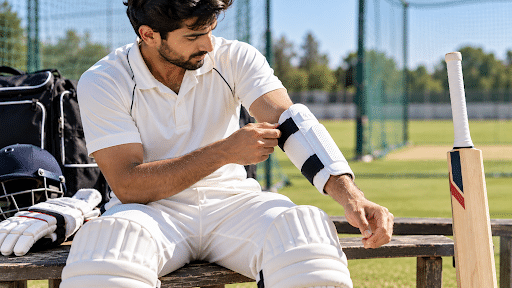
Cricket requires concentration, quick reactions, and reliable protective equipment. When facing fast deliveries, batsmen can experience unexpected impacts on their arms, particularly from rising balls. A properly fitted cricket arm guard provides additional protection while allowing natural batting movements. Choosing suitable equipment helps players maintain comfort and confidence throughout an innings.
However, not every arm guard provides the same level of comfort or coverage. Factors such as protective materials, weight, fitting, flexibility, and durability should be considered before making a decision. Understanding these features can help beginners and experienced cricketers select appropriate equipment.
Why Is an Arm Guard Important in Cricket?
An arm guard helps protect vulnerable areas of the forearm and, depending on its design, the elbow. Fast deliveries can rise unexpectedly, causing painful impacts when a batsman misjudges the ball or attempts a defensive shot. Quality arm protection helps absorb and distribute some impact energy, reducing the risk of bruising and certain injuries.
Although arm guards provide additional coverage, they cannot prevent every injury. Players should continue using appropriate helmets, batting gloves, and other protective equipment while maintaining proper batting technique.
Different Types of Cricket Arm Guards
Cricket arm guards are available in different designs to accommodate individual preferences and playing requirements. Traditional models often provide structured protection, while modern lightweight guards emphasize flexibility and comfortable movement.
Forearm Guards: Designed primarily to protect the forearm against direct ball impacts.
Elbow Guards: Provide additional protection around the elbow joint, depending on their construction.
Extended Arm Guards: Offer broader coverage across the forearm and nearby vulnerable areas.
The most suitable option depends on the player’s stance, exposed arm position, and desired level of protection.
Essential Features of a Quality Cricket Arm Guard
Several features influence the effectiveness and comfort of protective equipment.
Impact-Absorbing Padding: High-density foam and reinforced panels help manage impact forces.
Flexible Construction: A suitable design should allow comfortable wrist and elbow movement during batting.
Adjustable Straps: Secure fastening systems help prevent unnecessary movement during play.
Breathable Materials: Ventilated fabrics can reduce discomfort caused by sweating during long innings.
Lightweight Design: Reduced weight may improve comfort, provided the guard maintains adequate protective coverage.
Players should evaluate these features together rather than selecting equipment based exclusively on appearance.
How to Choose the Correct Arm Guard Size
Correct sizing is essential for protection and freedom of movement. An oversized guard may slip during batting, while an undersized model can create pressure and leave important areas exposed.
Players should measure the relevant section of their forearm and compare the measurements with the manufacturer’s sizing chart.
The protective section should cover the intended area without interfering with batting gloves or restricting elbow movement.
Before regular use, players should practice controlled batting movements while wearing the guard to confirm its stability.
How Flexibility Affects Batting Performance
Batting requires coordinated wrist movement, controlled arm positioning, and smooth bat acceleration.
A bulky or poorly fitted arm guard may interfere with these movements, affecting comfort and shot execution.
Flexible protective equipment allows batsmen to maintain more natural movement when playing drives, cuts, pulls, and defensive strokes.
However, flexibility should never come at the expense of sufficient impact protection.
The ideal design balances mobility, secure fitting, and protective coverage.
Common Mistakes When Selecting an Arm Guard
Several purchasing mistakes can affect protection and comfort:
- Choosing an incorrect size.
- Prioritizing appearance over protective quality.
- Ignoring wrist and elbow flexibility.
- Selecting guards with uncomfortable straps.
- Overlooking damaged or worn padding.
Checking these factors before regular use can help players avoid unnecessary discomfort.
Maintaining a Cricket Arm Guard
Proper maintenance helps preserve protective equipment.
After practice or matches, wipe away dirt and moisture according to manufacturer instructions. Allow the guard to dry naturally before storing it.
Inspect straps, stitching, and protective padding regularly. Equipment showing significant damage or reduced protective integrity should be replaced.
Frequently Asked Questions
1. What is a cricket arm guard used for?
A cricket arm guard protects vulnerable areas of the forearm and sometimes the elbow against ball impacts during batting.
2. Should an arm guard fit tightly?
It should fit securely without slipping or restricting circulation, wrist movement, or elbow flexibility.
3. Are lightweight arm guards suitable for beginners?
Yes, provided they offer appropriate impact protection, coverage, and a comfortable fit.
4. Can arm guards affect batting performance?
Poorly fitted guards may restrict natural movement. Correctly fitted equipment should allow comfortable shot execution.
5. How long does a cricket arm guard last?
Its lifespan depends on material quality, playing frequency, maintenance, and the condition of protective components.
Conclusion
Choosing a cricket arm guard requires balancing protection, comfort, flexibility, and correct sizing. Protective padding, secure straps, and suitable construction help players maintain natural batting movements while reducing exposure to certain injuries.
Regular inspections and appropriate maintenance are equally important for reliable long-term use. Comparing protective guards based on coverage, materials, fitting, and flexibility can help cricketers make informed equipment decisions.
Read More: How to Choose Cricket Batting Pads for Better Protection and Mobility
